
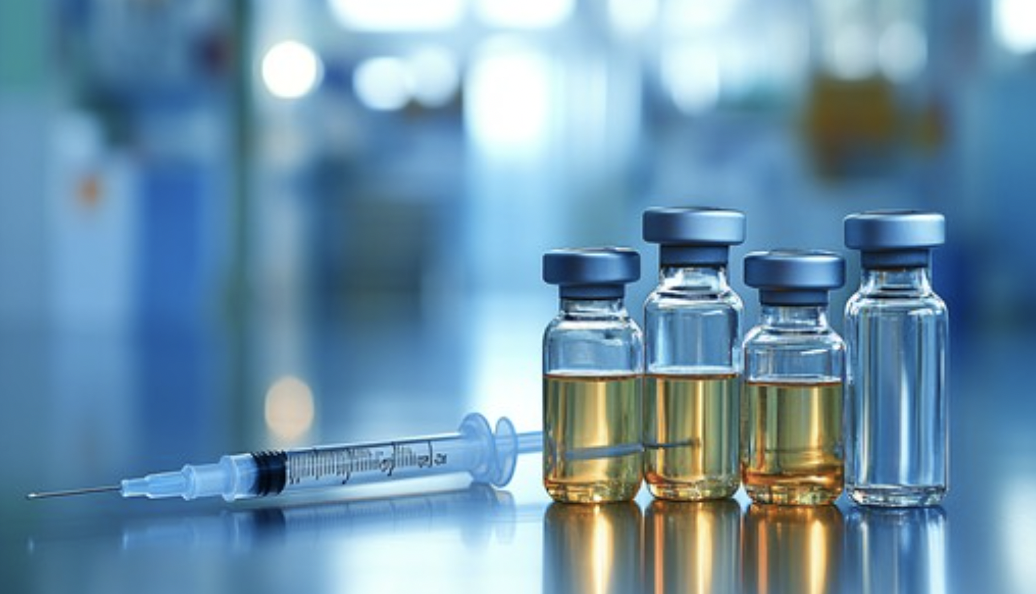
What To Do When Your Research Peptides Arrive
A Step-By-Step Guide To Handling, Reconstituting, And Preparing Your Vials
When your research peptides arrive, they come in the form of a lyophilized powder. This freeze-dried powder is created through a process called lyophilization. During lyophilization, moisture is removed under cold, vacuum conditions. This protects the integrity of the peptide and keeps it shelf-stable until it is reconstituted. In this form the peptide is stable, but not yet usable for measurement or research administration. It must first be combined with bacteriostatic water.
This guide walks you through every step so you can handle your vial safely and prepare it properly.
Step 1. Inspecting Your Vial
When your package arrives:
• Make sure the vial is intact
• Confirm the correct product and milligram amount
• Look at the powder. It might be a solid “puck” or a loose powder. Both are normal.
Store the vial in a cool, dark place until you are ready to reconstitute it.
Step 2. What Lyophilized Peptides Are
Lyophilized peptides are simply peptides that have been freeze-dried so they can be shipped and stored without degrading. Removing moisture prevents bacterial growth and keeps the structure of the molecule stable.
Because the water has been removed, the peptide must be mixed with sterile liquid before use. This process is called reconstitution.
Step 3. Why Bacteriostatic Water Is Used
Peptides are reconstituted with bacteriostatic water rather than plain sterile water. Bacteriostatic water contains a small amount of benzyl alcohol that acts as a preservative. Ours contains 8 percent benzyl alcohol.
This helps slow bacterial growth once the peptide is mixed and can extend stability during research use. It is the most common and preferred liquid for reconstitution.
Step 4. Understanding Vial Capacity
Before you add bacteriostatic water, there are three things you must know:
- The vial capacity
- How much bacteriostatic water you want to add
- Your desired research dose in micrograms or milligrams
The vial capacity simply means how much peptide powder is in the vial. For example, a 10 mg vial of BPC 157 has a vial capacity of 10 mg. This value is needed when you plug numbers into a peptide calculator.
Step 5. Choosing Your Reconstitution Volume
Most peptide vials are 3 ml in physical volume. This means they can safely hold up to 3 ml of liquid once water is added. Some specialty peptides come in 10 ml vials, but the standard is 3 ml.
Typical reconstitution volumes are:
• 1 ml
• 2 ml
• 3 ml (max for most vials)
Smaller volumes make the math easier and create higher concentrations. Larger volumes create more diluted solutions. There is no right or wrong choice. It is simply a matter of preference and convenience.
Step 6. Reconstituting the Peptide
Once you decide how much bacteriostatic water to use, follow these steps:
- Remove the plastic cap from the vial.
- Clean the rubber stopper with an alcohol swab.
- Draw up your selected amount of bacteriostatic water.
- Holding the vial and syringe horizontally, Insert the needle through the stopper and let the water pool slowly at the top of the vial. Avoid blasting the lyophilized powder directly.
- Turn the vial up right-side, and allow the water to dissolve the peptide. Gently roll if needed (to mix any fragments or pieces stuck to the side), but DO NOT SHAKE.
- Wait until the solution is completely clear.
We also have a VIDEO to help understand what to do.
Your peptide is now reconstituted and ready to be measured for research use.
Step 7. How To Use an Online Peptide Calculator
We provide a link to our peptide calculator HERE. It does not tell you how much bacteriostatic water to add. You must decide that part yourself based on your vial size.
The calculator requires three inputs:
- Syringe size (.3mL, .5mL, 1mL
- Total mg in the vial (vial capacity)
- Total ml of bacteriostatic water you added
- Your desired dose in mcg (1mg is 1000mcg for reference)
When you enter these values, the calculator tells you how many units to draw for a research administration. Units are the markings on an insulin syringe. This is the easiest way to measure peptides once they are reconstituted.
For example:
• Vial capacity: 10 mg
• Bacteriostatic water added: 2 ml
• Desired dose: 250 mcg
The calculator will output the exact number of syringe units corresponding to 250 mcg based on your concentration.
Units on an insulin syringe are the small numbered markings printed along the side of the barrel. They are not a measure of drug strength. They are only a measure of liquid volume inside the syringe.
A typical insulin syringe is designed so that:
• The entire syringe holds 1 ml of liquid
• That 1 ml is divided into 100 equal segments
• Each segment is called 1 unit
So the numbers you see (10, 20, 30, 40, etc.) are simply volume markers that help you measure how much liquid you are drawing up.
Step 8. Storing Your Reconstituted Peptide
After reconstitution, store the vial in the refrigerator. Keep the stopper clean and avoid temperature changes. Bacteriostatic water helps preserve the solution, but proper storage is still important.
Final Thoughts
Receiving your peptides is only the first step. The freeze-dried powder must be reconstituted before it can be worked with. Understanding vial capacity, choosing your reconstitution volume, and using a calculator to determine units will make the entire process simple.
With these steps, you can prepare your vials accurately and confidently and move forward with your research work.